To Instagram or not to Instagram

ebefc7589e6319391d9b06215d05c879


It is a truth more or less universally acknowledged that whatever it is in you that makes you write poetry is also likely to make you unsuited to sticking your head above the poetry parapet and publicising your work – which is why, in an ideal world, poets would make enough money to employ a literary agent to do it for them. Alack. This world is far from ideal.

To be fair, I enjoy readings now I’ve learnt to adopt a persona to do the reading for me, ie someone who looks like me but who talks in a slightly lower register and who understands that it’s the poems that matter, not the poet. She lets the angst-ridden me-who-writes-the poems stand just behind her, not quite in full view, and together we give the poem our best shot.

Submitting to magazines and entering competitions, with all its attendant rejection, is a harder thing to keep doing. Even those rather more elusive acceptances can be anxiety-inducing if you are prone to feelings of unworthiness. Finding a group of poets who similarly struggle can be helpful in this instance. Gentle peer pressure, and the sharing of triumphs and insecurities, can be helpful in overcoming what is a very natural reticence.

Then there’s social media. Don’t get me wrong, I love it. I love that this morning, before I even got out of bed, I went on a wander around a Christmassy New York, saw the Northern Lights in Iceland, and had a paddle around Bristol’s Floating Harbour in a canoe, all thanks to the marvel that is Facebook. But I don’t want to spend hard-won free time on FB, Twitter, Instagram et al shouting into a vacuum about my poems when I could be writing them.

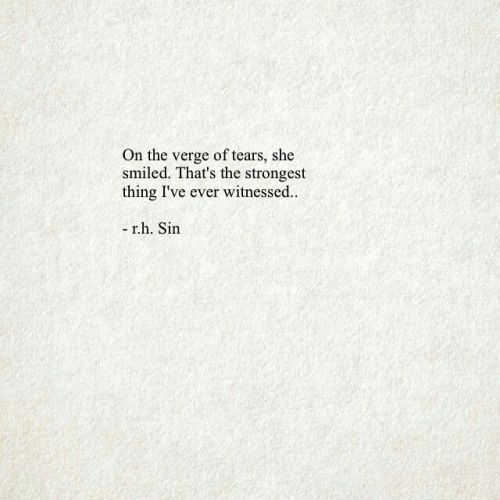
To this end, I recently went on a course run by Josie Alford, who’s half my age and who knows how to do this stuff in an efficient and organised way. It was reassuring to find that I already do much of what she suggested to grow a readership, and that it was mainly a question of fine-tuning the process, by looking at the insights and doing a bit of analysis to find the best times to post, and who my target audience might be. Instagram, I decided, is probably not an ideal platform for my work. Two-line platitudes in an arty typewriter font don’t really float my boat, though if I could get one of my kids to show me how it works, I might post some photos.

I think I’m always going to struggle with the writing/publicising balance, and submitting, for that matter, but it’s a fact that writing poetry is essentially a collaborative art. Poems only really come into their own in the imagination of the reader. So if you want your work to achieve its potential, self-publicity is something that has to be done, preferably in the least painful and time-consuming way possible.
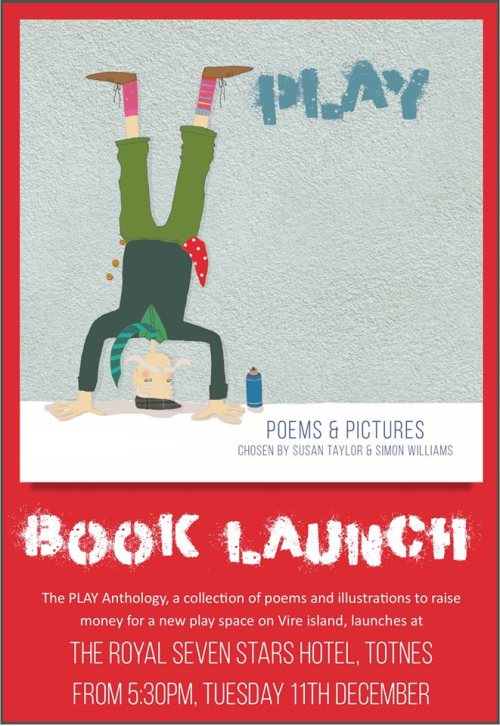
The ‘Play’ anthology of poems

Last week I had the privilege of attending the Bristol launch of ‘Play’, an anthology of 150 poems on the subject of having fun.

The anthology was compiled by poets Simon Williams and Susan Taylor to raise funds for a play area on Vire Island in Totnes, in memory of their three-year-old grandson, Reuben, who was killed in a car accident a year ago.

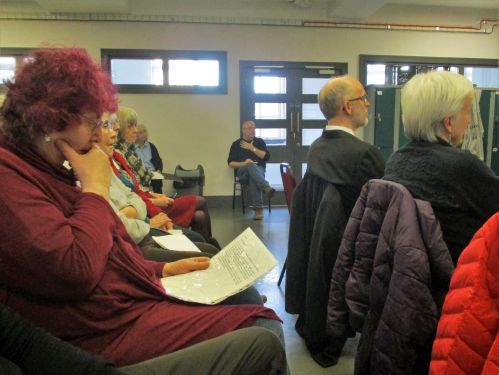
It was an emotional evening at the Golden Guinea, invoking joy, nostalgia and sorrow.

‘Play’ would make a wonderful Christmas gift, for yourself or someone you care for. You can buy your copy from Paper Dart Press or at tomorrow’s launch in Totnes, the details of which are below.

play

Alison Brackenury at Silver Street Poetry

IMG_3436

Today we were delighted to welcome Alison Brackenbury as special guest reader to Siver Street Poetry and Spoken Word.

Alison read from her latest book ‘Aunt Margaret’s Pudding’, which mixes poems about her family and childhood with recipes from Alison’s grandmother’s oilskin notebook and a prose account of her grandmother’s life.

AMP

The reading was as delicious as it sounds and was supplemented, as ever, by varied open mic offerings from those present.

IMG_3430

Alison was pleased to go home with an empty book bag, having broken all Silver Street records for the sale of books by a guest poet!

Silver Street Poetry and Spoken Word takes place on the first Friday of each month, at The Station, Silver Street, Bristol BS1 2AG, and the entry charge is £3. Do come along, bring one of your poems, bring one written by someone else, or simply bring your ears.


Alice Oswald reading at the Bristol Poetry Institute

Alice Oswald

We’re big fans of Alice Oswald’s poetry, so when we saw that she was delivering this year’s annual reading from the Bristol Poetry Institute, we leapt to get tickets.

Though it’s not just her poems we love; it’s the way she performs them too. The previous time we heard her read, at Bristol Watershed in May 2013, it was from ‘Memorial’ and ‘A Sleepwalk on the Severn’, Alice grabbed the audience by the collective scruff of its neck and addressed it with her work, which she read from memory. It was intense, dramatic and mesmerising; the best reading either of us had ever been to.

This time she read her long poem, Nobody, which is ostensibly about a bit-part player in the Odyssey: the poet who was charged with guarding Clytemnestra by Agamemnon, and subsequently marooned on a rocky island in the middle of the Mediterranean by the queen’s lover, Aegisthus. Really, though, it’s a paean to the ocean, and as Alice recited it by heart in the darkness of the Great Hall at Bristol University, we found ourselves rocked in its rhythms. Nothing disturbed the swell of the narrative, and when, after an hour, it ended and we could finally fidget, I found I could barely shift for the pain of having sat so still for so long, without really having noticed.

nobody

The reading was followed by a very interesting question and answer session. Particularly fascinating was answer to the chicken-and-egg question of how much the poem is shaped by the effort of memorising it. Alice said her memory is her editor; if she can’t memorise a section, she is liable to expunge it as not working.

Arthritis notwithstanding, it was a fabulous reading in the truest sense. If you get a chance to go and hear Oswald, seize it. It’s an experience you’re unlikely to forget.

In praise of everyday traipsing

montpelier St Andrew's railway bridge

In his novel Strandloper, Alan Garner tells the true story of William Buckley, a working-class farm labourer from Cheshire, who was convicted in 1803 on a trumped-up charge of trespass and transported to Australia. Upon arrival, William escapes from the settlement and is rescued from near-death by aborigines of the Beingalite people, with whom he lives for the next 30 years. At the end of the book, he is pardoned and returns to England, where he visits his former fiancée, Esther. Realising that their lives have diverged too far for them to have any future together, he bids her goodbye for a final time and ritually walks the landscapes of their home, as he once walked those of Australia. This restorative last chapter ends with William performing a spirit dance inside the church, uniting the patterns of his life and its two cultures.

14910428_1582006881825001_4372852884612109372_n

It sounds perverse, but as much as I enjoy walking in new places, it’s the familiar, traffic-clogged roads of north Bristol that are more of a stimulus to my creativity. Not that nothing wondrous ever happens in these edgelands: during one Christmas, some years ago now, I was walking along the ring road past the Airbus playing fields, in the company of my eldest child, when we saw a parliament of hares – about twenty in a circle, with three looking out from the middle. That this was so rare and mysterious as to constitute a visitation still seems the case ten years on.

33599956_2476133249079022_3595525987741204480_n

Mostly, though, I plod past retail centres, bus stops, warehouses and suburban semis with my brain idling, much like the engines of the cars queuing alongside me. And it is in this mental state – not quite present in the moment, not quite switched off altogether – that the imagination sparks strange and useful connections.

7226

While I was writing my novel, Dart, this was when my characters would come to life and start talking to each other, apparently of their own accord. It usually happened while I was walking to my then place of work – one mile through a post-war council estate and alongside a stream throttled with rubbish, shopping trolleys and the occasional burnt-out car. An incongruous place for families waiting out the Black Death in their remote Dartmoor village to make their presence felt, you might think, but this didn’t deter them – in fact, they’d grow so vociferous that by the time I reached work, I had to race straight to the toilets to write it all down before one of my colleagues asked me to do something and I forgot it. I’m sure some of the staff must have thought I had a very weak bladder.

13902639_1485227791502911_2114861643467617911_n

These days I stick to poetry, but traipsing the everyday routes of my life still works its magic, whether it’s providing a hitherto unthought-of word or cadence, or an unexpected insight into what the poem wants to say. And occasionally – oh joy! – there’s the dropping of an almost fully-formed poem, or idea of the same, into my consciousness.

IMG_3896

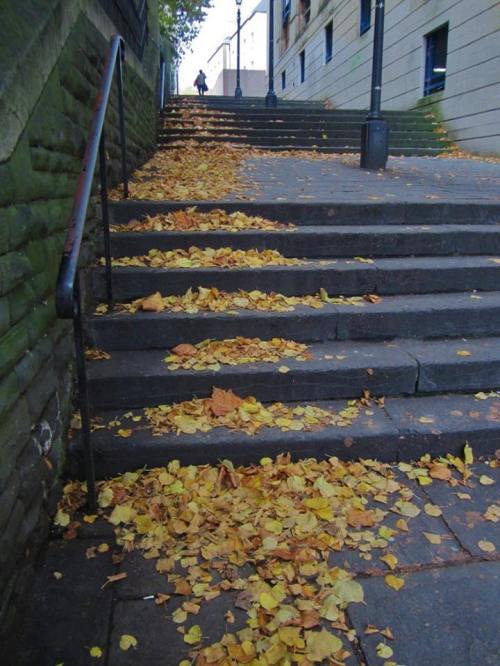
So if you’re struggling to shift a bout of writer’s block, why not put your shoes on, switch your brain off and go for a wander down your street? You might walk your way into a whole new poem.

40432690_2673662525992759_7111226576607379456_n