In praise of everyday traipsing

montpelier St Andrew's railway bridge

In his novel Strandloper, Alan Garner tells the true story of William Buckley, a working-class farm labourer from Cheshire, who was convicted in 1803 on a trumped-up charge of trespass and transported to Australia. Upon arrival, William escapes from the settlement and is rescued from near-death by aborigines of the Beingalite people, with whom he lives for the next 30 years. At the end of the book, he is pardoned and returns to England, where he visits his former fiancée, Esther. Realising that their lives have diverged too far for them to have any future together, he bids her goodbye for a final time and ritually walks the landscapes of their home, as he once walked those of Australia. This restorative last chapter ends with William performing a spirit dance inside the church, uniting the patterns of his life and its two cultures.
14910428_1582006881825001_4372852884612109372_n

It sounds perverse, but as much as I enjoy walking in new places, it’s the familiar, traffic-clogged roads of north Bristol that are more of a stimulus to my creativity. Not that nothing wondrous ever happens in these edgelands: during one Christmas, some years ago now, I was walking along the ring road past the Airbus playing fields, in the company of my eldest child, when we saw a parliament of hares – about twenty in a circle, with three looking out from the middle. That this was so rare and mysterious as to constitute a visitation still seems the case ten years on.
33599956_2476133249079022_3595525987741204480_n

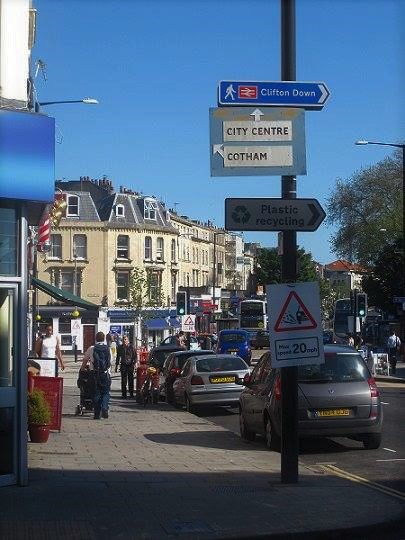
Mostly, though, I plod past retail centres, bus stops, warehouses and suburban semis with my brain idling, much like the engines of the cars queuing alongside me. And it is in this mental state – not quite present in the moment, not quite switched off altogether – that the imagination sparks strange and useful connections.
7226

While I was writing my novel, Dart, this was when my characters would come to life and start talking to each other, apparently of their own accord. It usually happened while I was walking to my then place of work – one mile through a post-war council estate and alongside a stream throttled with rubbish, shopping trolleys and the occasional burnt-out car. An incongruous place for families waiting out the Black Death in their remote Dartmoor village to make their presence felt, you might think, but this didn’t deter them – in fact, they’d grow so vociferous that by the time I reached work, I had to race straight to the toilets to write it all down before one of my colleagues asked me to do something and I forgot it. I’m sure some of the staff must have thought I had a very weak bladder.
13902639_1485227791502911_2114861643467617911_n

These days I stick to poetry, but traipsing the everyday routes of my life still works its magic, whether it’s providing a hitherto unthought-of word or cadence, or an unexpected insight into what the poem wants to say. And occasionally – oh joy! – there’s the dropping of an almost fully-formed poem, or idea of the same, into my consciousness.
IMG_3896

So if you’re struggling to shift a bout of writer’s block, why not put your shoes on, switch your brain off and go for a wander down your street? You might walk your way into a whole new poem.
40432690_2673662525992759_7111226576607379456_n


A review of ‘A Book of Hours’ by Lucy English

book of hours


‘The Book of Hours’ by Lucy English

It’s often noted how rare it is for a poet to straddle the gap between page and performance poetry successfully. Lucy English has managed to keep a foot firmly in both camps for many years, and with her new project The Book of Hours (Burning Eye books), she has added an extra genre, that of poetry film.

It’s an ingenious idea – a calendar of poems that re-imagine the illustrated psalter of mediaeval literature for a secular, 21st century readership/audience. Lucy is supported in this endeavour by her extensive knowledge of the both fields, coupled with a poetic voice that is especially well suited to the demands of poetry film.

For all that there are references to stained glass, doom paintings, sun dials and psalmicly panting sheep, the subject-matter of the poems is resolutely secular. Churches are places to be visited in a spirit of curiosity rather than devotion, saints are grey and made of lead, and no miracles happen at wells that are simply oozy patches in stony holes. Similarly, the lives encapsulated in the poems are not ones of monastic contemplation. The poems accommodate a sizeable cast of friends, ex-lovers, family members, former inhabitants of holiday cottages, personifications of the seasons, and animals, and include arrivals from, and departures for, destinations far beyond an anchorite’s cell.

And yet the sacred is here, in the poet’s tender attention to moments snagged in the memory, rendering them dream-like, and magnified by their lifting up as an offering to the reader. This is the poetry of non sequiturs, missed opportunity, small losses that loom large, the lives we don’t lead:

The shadow of our little car against the land

touched the winter grass but did not bend it


‘That’s the only mark we should make on earth’ he said.

You would expect poems that are also the grist for film to have a strong visual element, and this is the case. We are often told, for example, what the narrator of the poem is wearing; similarly, the month of June dons a rucksack, boots and a long green dress, and even the sky wears its best shirt, all pink patterned with aubergine, / silks and satins with a new tie of rainbow. This layering of detail, building in short statements, extends to the other senses, to the point where they spill into synaesthesia: I catch a sound in my hands./ The sparrow song. Sip sip sip.

For a full appreciation of the poems, I strongly recommend a visit to the website, where you can view all the accompanying films. There’s some beautiful work here. I particularly loved Helen Dewbery’s mesmeric film for the poem, Drive Through The Night, about the destination for which we’re all ultimately headed.


Walking Dartmoor on World Mental Health Day

As writers as diverse as Simon Armitage, Samuel Coleridge, Charles Dickens, J K Rowling, Rebecca Solnit, Edward Thomas, Virginia Woolf and William Wordsworth attest, walking is vital to the creative process. I too have found this to be the case.

Yesterday was World Mental Health Day. It was gloriously sunny here in the West Country, so I packed up some victuals, my map and the dog, and drove down to Buckfast Abbey on the south-eastern edge of Dartmoor. From there I walked up through Hembury Woods to the iron-age hillfort on the balding crown of the hill, before descending to the River Dart, winding my way back to edge of the woods and retracing my steps through the lanes to the Abbey.

IMG_2819(3)

In the poem Wintering, Sylvia Plath describes the jars of honey from her hives as ‘six cat’s eyes in the wine cellar/wintering in a dark without window/at the heart of the house’. I carry these words in my head at this time of year, as I try to build up a stock of remembered sunlight to get me through the too short, too dark days of winter.