
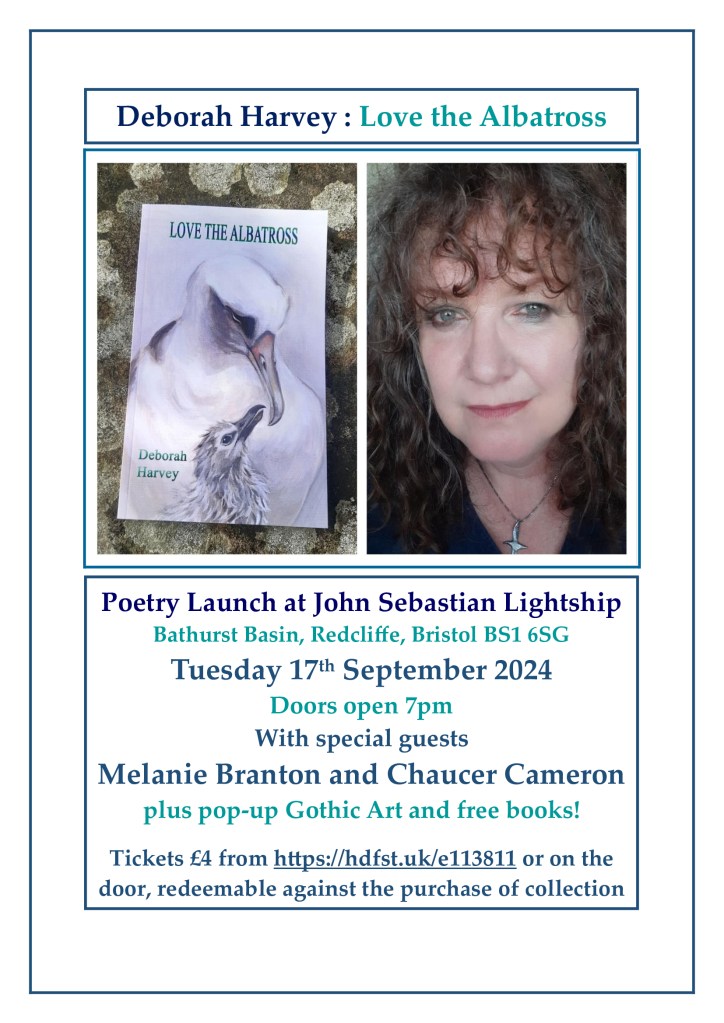
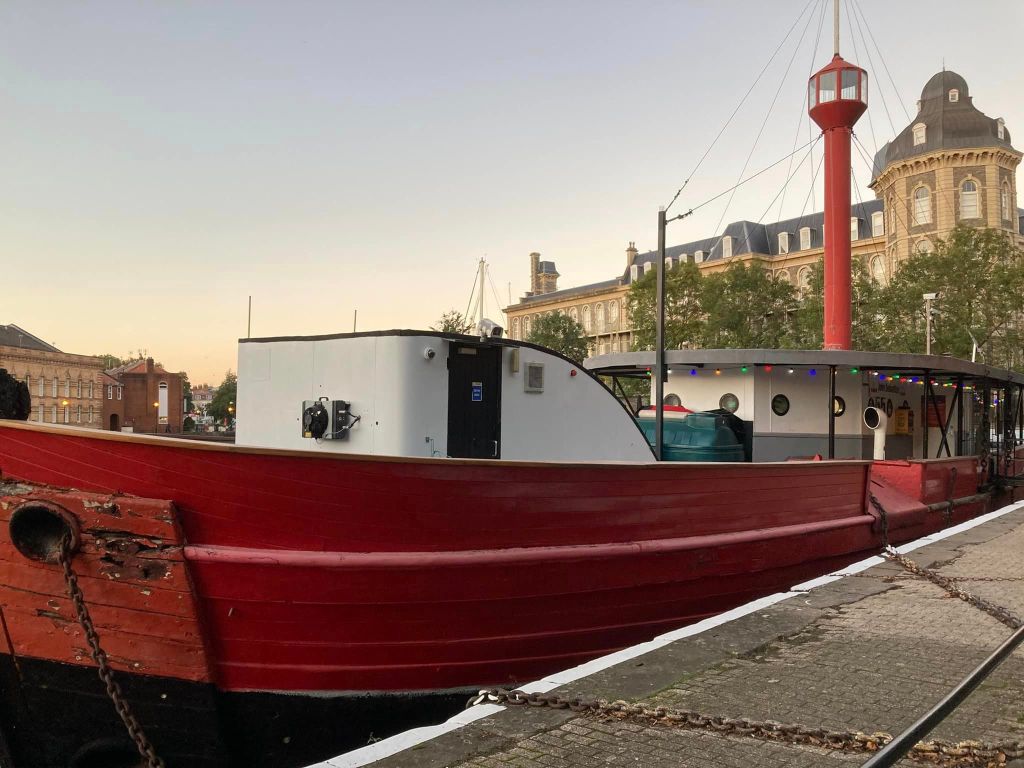
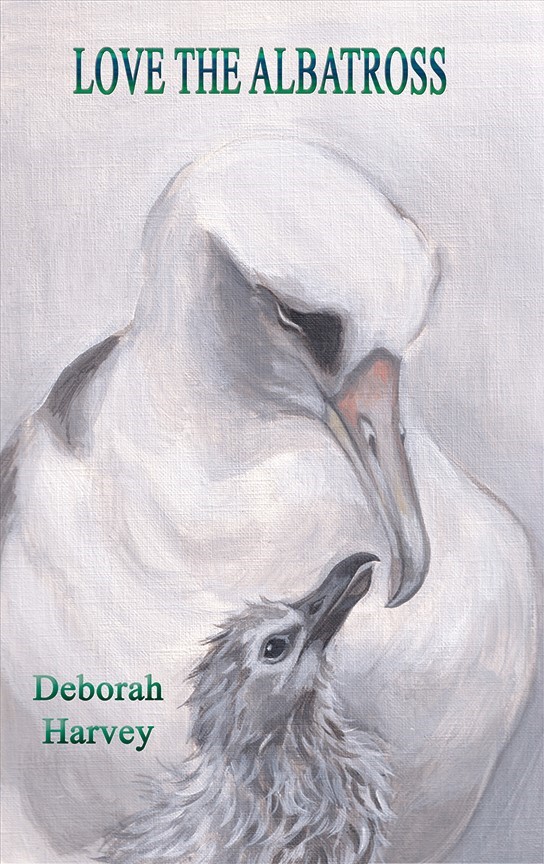
First thing on Tuesday morning I looked into the bathroom mirror and saw something had altered in the eyes looking back at me. And I could feel the woman-who-reads-the-poems – the one I stand just behind at readings, marvelling as she rises to the occasion – making her move early, to hold my hand through the day at work and the difficult rush hour drive down town to the John Sebastian Lightship moored at Bathurst Basin, and step forward at the appropriate moment to launch a handful of albatrosses into the Bristol night. So lucky to have her at my side!
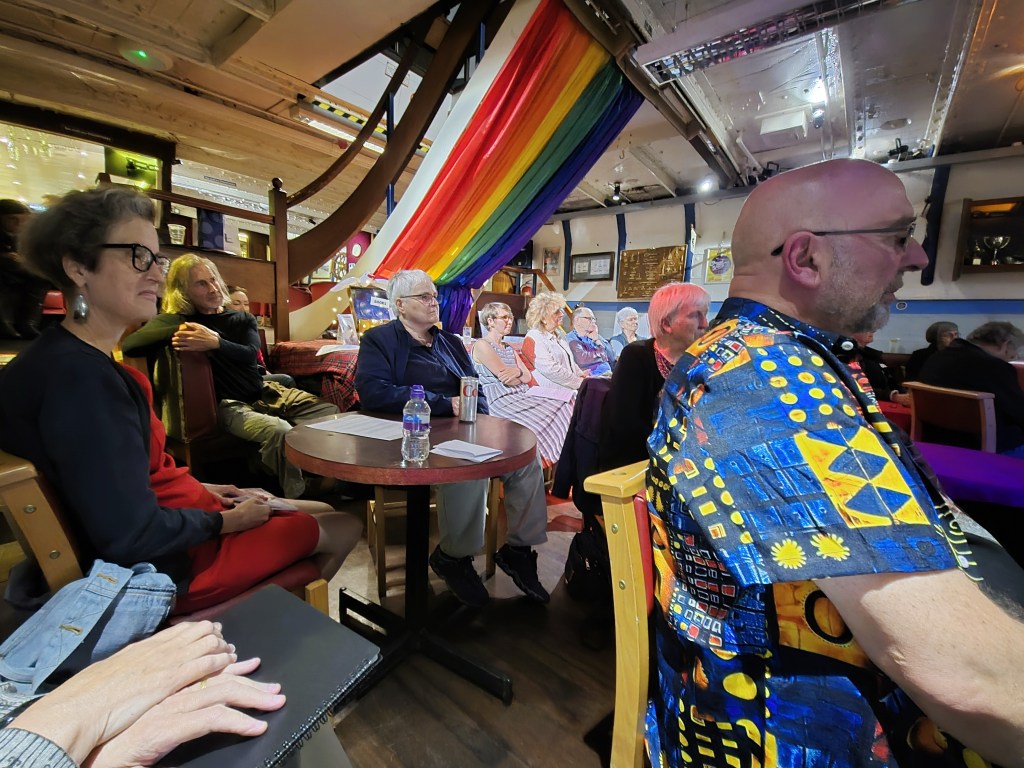
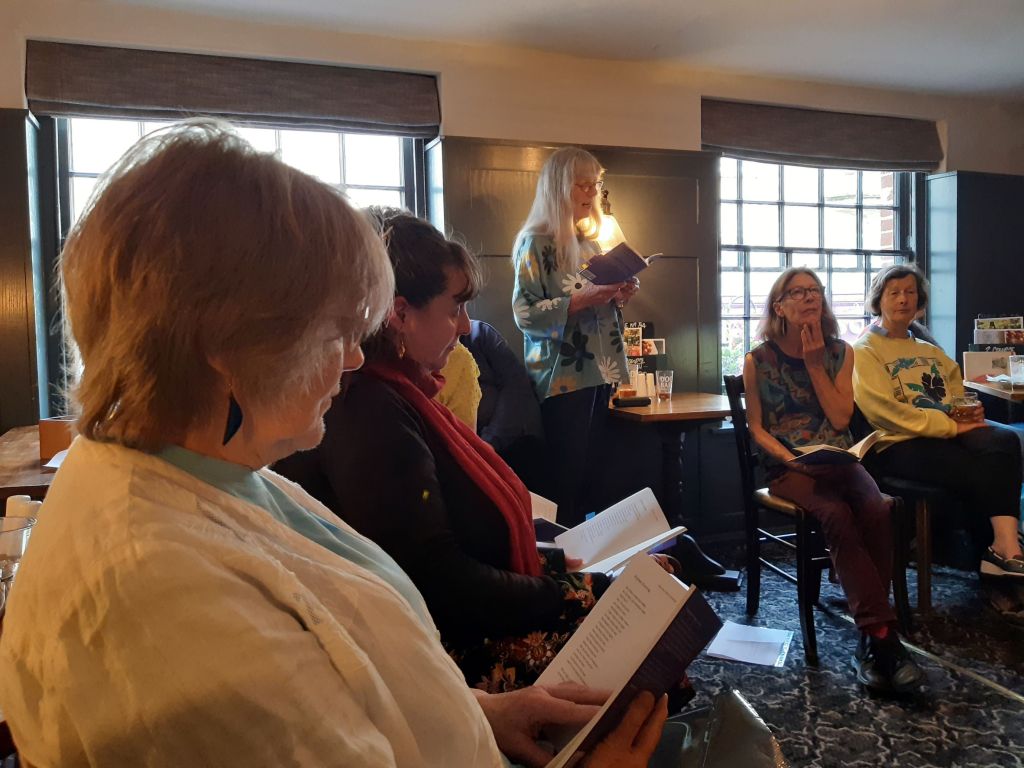
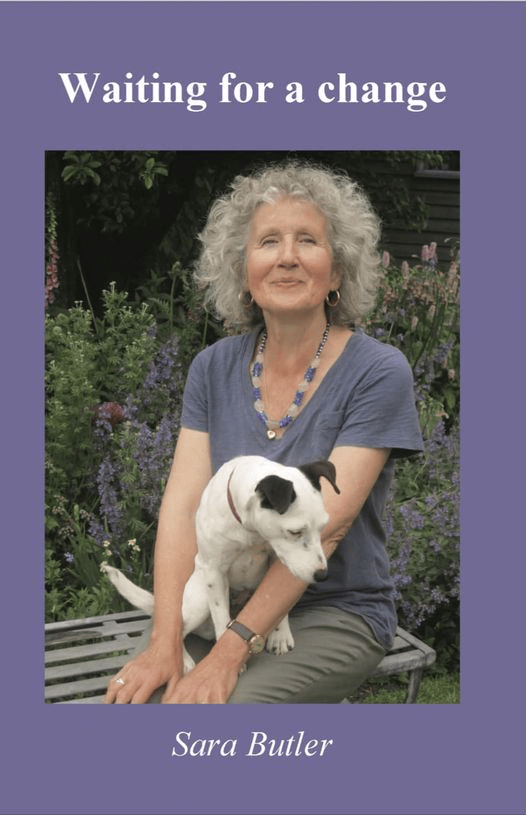
MC for the night was local poetry supremo, Helen Sheppard, another pair of very safe hands. And first, guest readings from Melanie Branton and Chaucer Cameron, two of the most gifted poets and generous women I know, who both understood the cost of writing these poems and launching them into the world. I was so privileged to have them agree to read alongside me.
My selection of poems was followed on a Q&A on the subject of writing from trauma, hosted by
counseller and former director of Poetry Can, Colin Brown.
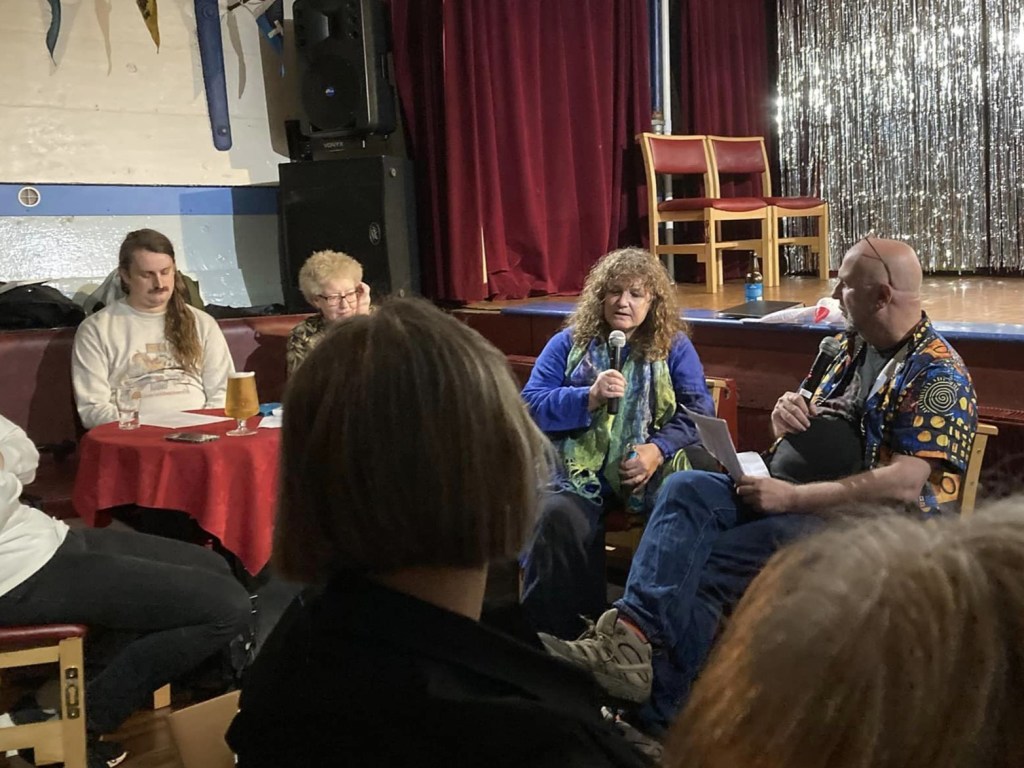
For anyone who’s interested, here’s a transcript of the question and answer session:
Question: You mentioned what a very difficult subject estrangement is to talk about, and yet you’ve written a book of poems on that very subject, which you now have to share with the world. What made you decide to do it?
Answer: I don’t think you can always control which poems turn up and when, and there came a point, about four years ago, when these were definitely the sort of poems that wanted to be written.
Question: Do you know why that was?
Answer: Well, the latest estrangement from my child was showing every sign of lasting a lot longer than the previous one, so writing poems was a way of engaging with the situation without having to talk about it and risk shame or the judgment of other people, because of course at first it was in private.
Question: Perhaps it was also a way of maintaining a connection with your child?
Answer: Oh, the connection was there all right. Writing the poems was a way of managing it, without impinging on their desire for no contact.
Question: What do you mean by managing that connection?
Answer: Well, as I said during the reading, sometimes the relationship you have with someone who isn’t physically in your life is even more intense than if they were present.
Question: And that must take a toll emotionally?
Answer: Yes. Before I started writing the poems, it felt like I was experiencing all the stages of grief, all at the same time, every day.
Putting all that emotion into poem-sized chunks and working at them meant I could explore it in a measured way, using metaphor and story to try to make sense of it.
Question: Yes, because you’re not ranting or seeking validation for your own individual situation here, are you?
Answer: Oh, I definitely wanted to avoid that, because that would have stopped the poems making connections with other people. They had to be art, which meant they had to leave room for the reader to inhabit with their own experiences.
Question: And there were your child’s feelings to consider too?
Answer: Absolutely. Above all, they had to respect and preserve my child’s privacy. That’s always been really important to me.
Question: So, what steps did you take to ensure you did that?
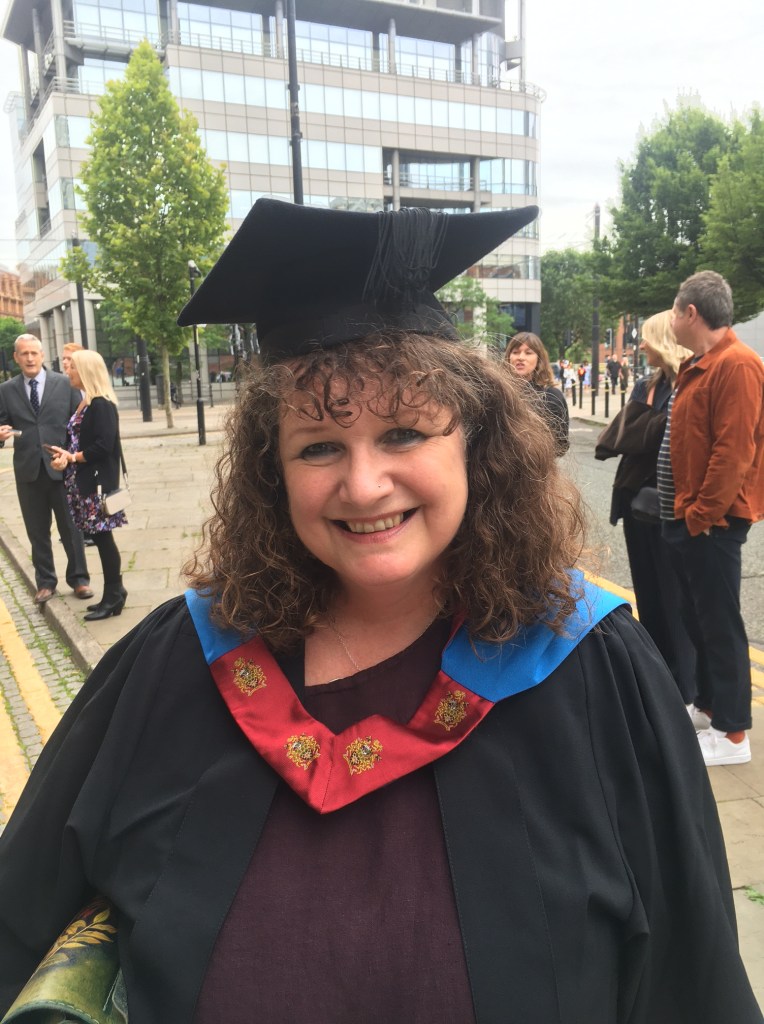
Answer: Well, not long before the poems started to materialise, my mother broke her hip and went to stay with my sister, who lives in the Midlands, while it mended. And then the pandemic started and she had to stay there, and I suddenly found myself with considerably more free time. So I quickly signed up for an MA in Creative Writing, and used that as a framework for writing ethically about trauma.
Question: How did you do that?
Answer: In the first instance, I studied and wrote essays on poets who engage with personal material and are emotionally authentic without compromising their integrity or privacy … Elizabeth Bishop and Denise Riley spring to mind.
Question: Did the course also affect your own practice?
Answer: Yes, I became very strict with the content of my own poems, making sure that they revealed emotional truths but not ‘my truth’, because you can be sure my version of events isn’t how my child sees things.
Question: And this is where the ethics come in?
Yes. I didn’t think it would be fair to use my platform, such as it is, to deny their truth, even if it doesn’t fit with mine.
Question: ‘The stories we tell ourselves to justify our actions’ is an idea that appears at various key points in this collection – in fact, there’s a thread of poems about it. Why is this important to you?
Answer: I don’t know if everyone does this, but I definitely think writers – and artists in general – tell themselves stories in order to make sense of difficult situations.
Question: And some of the poems hint at stories taking over and getting out of control …
Answer: Yes, and that’s to be avoided at all costs. Your relationship with your story has to remain a truthful one, and that applies whether you’re making art about the situation you find yourself in or just living it.
Question: Finally, you facilitate poetry writing groups in Bristol. If someone asked you what your ONE best tip for writing about a deeply personal issue, what would you tell them?
Answer: I’d say … exploit the unique nature of poetry. It’s a collaborative art, so always leave space for the reader to bring their own experience.
One way of doing this is to write ‘ghost’ poems – ones which convey your story without actually telling it, so that instead of splurging every last detail, you simply communicate the emotional truth of the matter.
And if I can add a second tip! – read poets who do this well, like Selima Hill, Sharon Olds, Ruth Stone, Caroline Bird, Kim Moore … there are so many of them.
The ensuing questions from the audience were thoughtful and insightful and the evening ended on a very warm and positive note.
Then it was time to heave a bit of a sigh of relief and head for home, where a chilled bottle of champagne and a warm dog were waiting.

With many thanks to Indigo Dreams Publishing, Colin Brown, Helen Sheppard and the Satellite of Love Poetry and Open Mic team, Katie Marland, Melanie Branton and Chaucer Cameron.



 The Leaping Word