The new venue for Silver Street Poetry

With just ten days to go before the first meeting of Silver Street Poetry in its new home, it feels timely to share our photos of our visit there today and remind our poets of its location.
IMG_0010

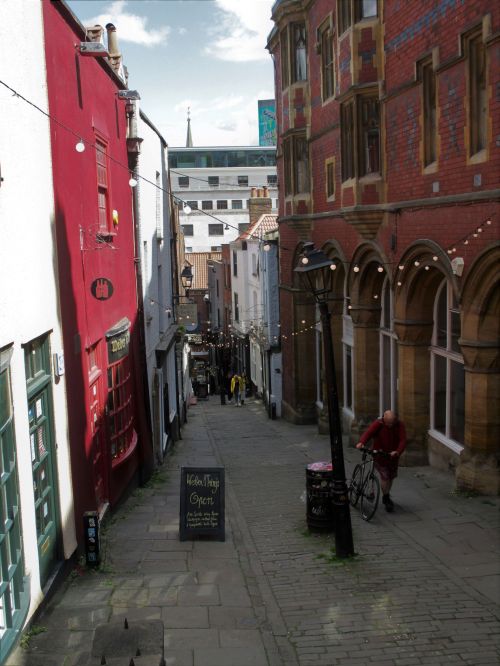
We parked in the Galleries – although Trenchard Street car park is nearer, of course – and took the scenic route to get there, via Christmas Steps. (Other, less precipitous approaches – for instance, walking up Colston Street from the Centre – are available.)
IMG_0015

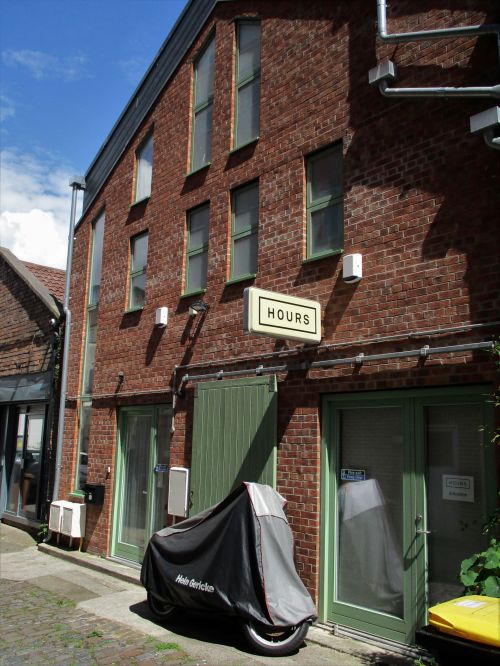
Hours is at 10 Colston Yard, which is reached from Colston Street. What fascinates me about it is that although the entrance is at ground level and therefore fully accessible, it is built into the side of the hill, and the views are amazing. I’d only been there in the dark before, so I was quite excited to get a new perspective on a familiar area.

We checked and it’s fine for poets to bring their own refreshments from nearby cafes, of which there are many.

We returned to Broadmead via Johnny Ball Lane, which passes below Hours and the other buildings of Colson Yard. Here they are, perched atop this magnificent Victorian wall.

IMG_0025

Just time for a quick coffee in Revive Cafe at the top of Corn Street.

IMG_0037

See you on Friday 7th June at our original time of midday and at our new venue of Hours, for hours – well, an hour and a half – of poems shared with friends.
 

Silver Street is on the move

SILVER STREET POETRY

Big changes down Silver Street this month, with the news that we are on the move!

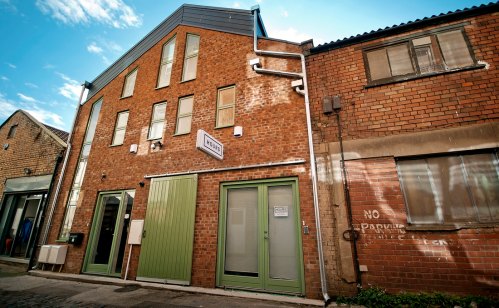
Unfortunately the dance studio we’ve been using at the Station is no longer available, so from next month, Friday 7th June, we’ll be holding our popular open mic in the attractive, modern space that is Hours, situated in Colston Yard, off Colston Street. The room we are using is on the ground floor and fully accessible, as is the WC.

The full address is 10 Colston Yard, Bristol, BS1 5BD, and the nearest affordable car parks are at Trenchard Street (0.2 miles) and the Galleries in Broadmead (0.5 miles). It is 0.4 miles from the bus station.

Please note also that we are reverting to our original, earlier time of 12 to 1.30pm.

Hours

If you aren’t sure of the exact location of Colston’s Yard is, fear not: here is a map.

Hours space map

The entrance to the Yard is pictured below.

Colston Yard

June’s guest poet at Hours will be Ross Cogan, the Creative Director of Cheltenham Poetry Festival, whose third collection, Bragr, is published by Seren. Don’t forget to bring a poem of your own or someone else’s to share. Entry fee is £3.


‘Memory is my editor’

The question and answer session following the recent reading by Alice Oswald at the Bristol Poetry Institute, during which she read from memory for the best part of an hour, provided inspiration for a recent Friday morning poetry group homework assignment.

When asked how much the poem is shaped by the effort of memorising it, Oswald answered that her memory is her editor, adding that if she finds she can’t memorise a section, she abandons it.

Colin’s challenge, therefore, was this:

Write a poem and memorise it as you go. As you go through the process of memorising your poem, listen to yourselves speaking the poem and assess how it feels. If the rhythm feels wrong, change it; if there’s a word or phrase or verse that doesn’t feel quite right, change it. If there’s a part of the poem you’re having trouble memorising, cut that part and write something you can memorise. 

When you bring your poem to the group, make copies for everyone as usual … but you’re going to be speaking the poem by heart, without benefit or distraction of a written copy. If you do forget a word or a line on the day, be prepared to improvise a line – don’t panic, get hung up, stop or give up. Don’t be nervous or intimidated; it’s only a workshop with supportive friends. 

It’s the process itself that’s important. It’s something to try.

Your poem must be at least 12 lines long.

Initially, I felt this assignment was going to be easy. Although I’ve never had the self-assurance to stand up and speak my poems from memory, I read them aloud so often in their almost-finished state that I do effectively learn them by heart, and I felt sure I could handle the assignment. The reality, however, was different. What I hadn’t taken into account was that I would be memorising from a far earlier point in the poem’s creation, and because it was still in a state of flux, I was effectively commiting consecutive drafts to memory. Again and again, I would fall back on something I’d changed at a much earlier stage and change it back, or stumble over the perfect combination of words I’d finally settled on, only to discover that according to my new editor, they weren’t that successful after all. But what I was left with was defnitely different from what would have been the finished poem, had I started reading it aloud at a later stage.

The other drawback I discovered is that the memory – or rather, the sneaky, hooded-and-cloaked brain behind it – tends to be an unreliable editor. Several times mine would substitute what I’d written for something rather more predictable and dull. Cliché really does trip more readily to the tongue.

On the day, before the scrutiny of my suddenly-rather-more-scary-than-usual peers, I managed to dredge up my poem with only one minor stumble, which was pleasing, but I don’t think I’ll be in a hurry to do it again, and I certainly won’t be rising to the challenge of doing a public reading from memory. Alice Oswald is a consummate poet and performer, with a background in drama, and she has acquired specific skills over years to pull off her prodigious feats. I find that remembering to assume my poetry reading persona (which is slightly different from the poetry-writing me), and to drop my voice a little, and engage with the audience, and make it sound as if I’m talking with them rather than reading at them, is quite enough to hold in my head at once, so I’ll definitely still be turning up at readings, clutching my file of poems to my ever so slightly nervously beating heart.

acoustic night


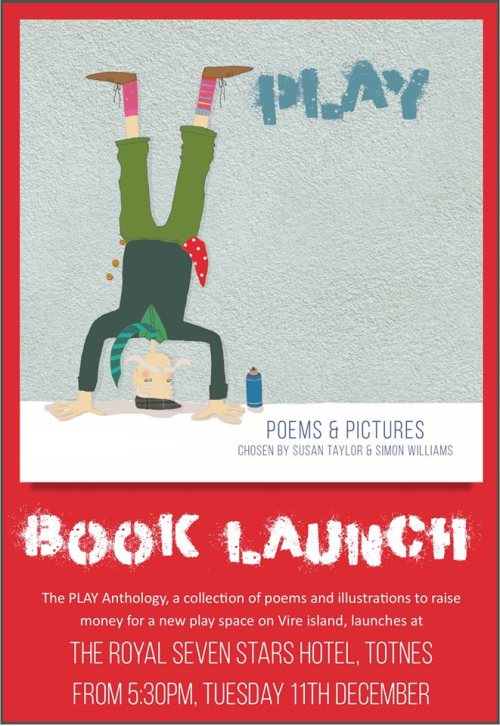
The ‘Play’ anthology of poems

Last week I had the privilege of attending the Bristol launch of ‘Play’, an anthology of 150 poems on the subject of having fun.

The anthology was compiled by poets Simon Williams and Susan Taylor to raise funds for a play area on Vire Island in Totnes, in memory of their three-year-old grandson, Reuben, who was killed in a car accident a year ago.

It was an emotional evening at the Golden Guinea, invoking joy, nostalgia and sorrow.

‘Play’ would make a wonderful Christmas gift, for yourself or someone you care for. You can buy your copy from Paper Dart Press or at tomorrow’s launch in Totnes, the details of which are below.

play

Alison Brackenury at Silver Street Poetry

IMG_3436

Today we were delighted to welcome Alison Brackenbury as special guest reader to Siver Street Poetry and Spoken Word.

Alison read from her latest book ‘Aunt Margaret’s Pudding’, which mixes poems about her family and childhood with recipes from Alison’s grandmother’s oilskin notebook and a prose account of her grandmother’s life.

AMP

The reading was as delicious as it sounds and was supplemented, as ever, by varied open mic offerings from those present.

IMG_3430

Alison was pleased to go home with an empty book bag, having broken all Silver Street records for the sale of books by a guest poet!

Silver Street Poetry and Spoken Word takes place on the first Friday of each month, at The Station, Silver Street, Bristol BS1 2AG, and the entry charge is £3. Do come along, bring one of your poems, bring one written by someone else, or simply bring your ears.