The Return of Silver Street Poetry

Beautiful Poets of Bristol and the Surrounding Metropolises!

We’re thrilled to announce the return of Bristol’s long-established and much missed poetry open mic, following an extended hiatus caused by Covid and then the search for a more spacious venue. 

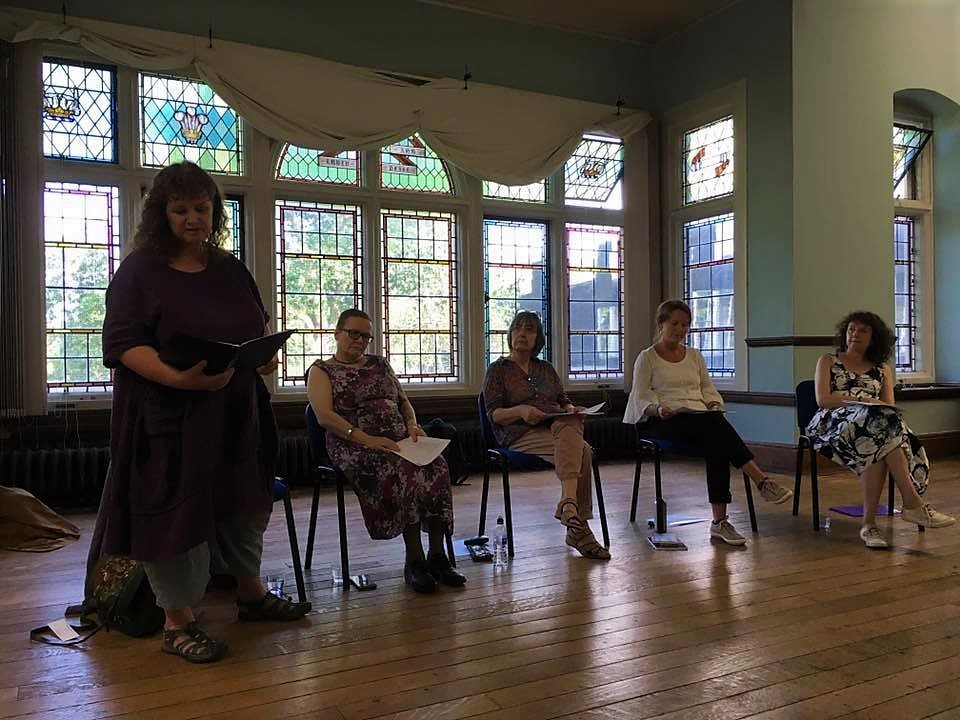
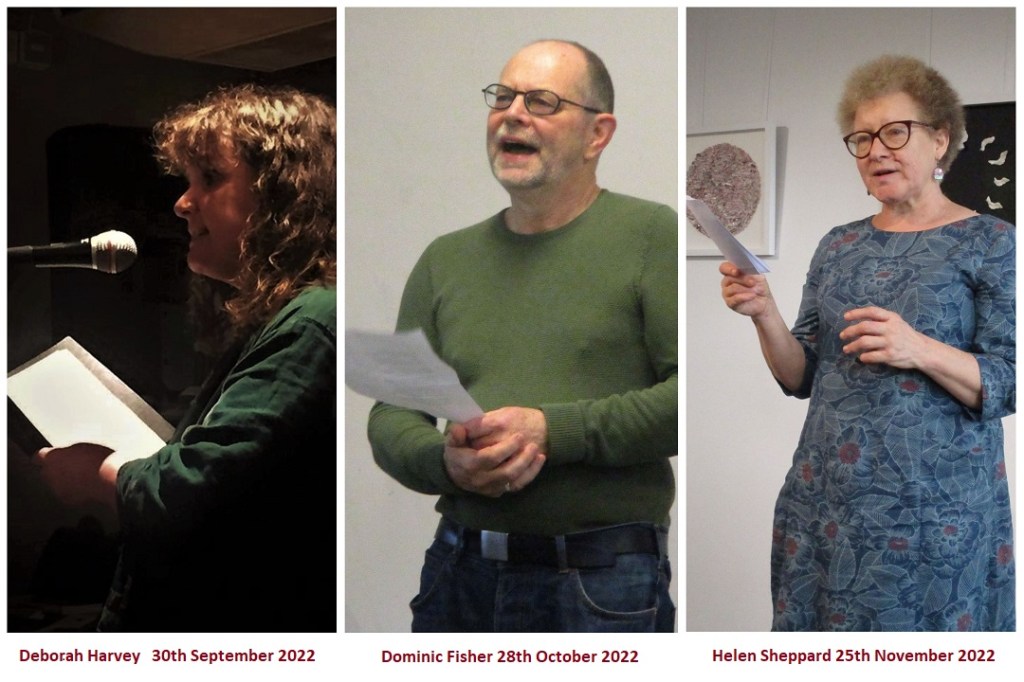
Silver Street Poetry will now be held on the last Friday of the month, from 12.30 – 2.00pm, at St Stephen’s Church, which is just off Bristol City Centre. We shall be returning in our usual format – two open mic sessions, to which everyone who wishes is invited to read a single poem, separated by two 10-minute sets from a guest poet, in the middle of which there will be a break, where attendees can avail themselves of the facilities, which include a café! The proceedings will be organised and overseen by Deborah Harvey of the Leaping Word, along with Rosalie Alston, Dominic Fisher and Pat Simmons.

Our first gathering will be held on 30th September 2022, when guest poet Deborah Harvey will be reading from her most recent collection of poems, ‘Learning Finity’. Upcoming guests include two more well-known local poets, Dominic Fisher (October) and Helen Sheppard (November).

A contribution of £4 is suggested, or whatever you can afford, to cover room hire costs and the guest poet’s expenses. Our ethos is very much one of support and encouragement, care and mutual respect, and all are welcome.

Entrance to the church is from St Stephen’s Avenue, through the dark blue doors in the porch at the base of the tower. The building is accessible to wheelchair users; please see St Stephen’s website for further details: https://www.saint-stephens.com/your-visit

We’d be grateful if you would spread the word, especially to poets who might not use social media or email and so are less likely to hear that our sessions are resuming.

Many thanks
Only connect

One of the best things about running an open mic is when people who have never read in public before arrive with a poem and, after a little encouragement, walk to the front of the room and launch it for the first time. The look on their faces as they get to the last couple of lines and realise they’ve not only done it, they’ve nailed it, is marvellous; a mixture of delight and relief that spreads to everyone present, if the explosion of applause that follows is anything to go by.

IMG_0185


It’s a long time since I first got to my feet in Bristol Central Library, the then home of Silver Street predecessor, Can Openers, to read a poem about my great-great-grandmother, Mary Block of Christmas Steps. I was so nervous I managed to flick the black Bic I was holding (I’ve no idea why) right across the floor and into the listeners. Yet when I reached the end, I was amazed by how much I’d enjoyed the experience.

Since then I’ve learnt various techniques to improve my performance. (All page poets who read their poems in public are also performance poets.) Chief amongst these is preparation of my set – I time everything so I never have to ask ‘Am I doing all right for time?’ and I rehearse not just the poems but how I plan to introduce them too. I leave nothing to chance.

Until last Thursday evening, that is, when I read at Lyrical at Trowbridge Town Hall, along with Dawn Gorman, Anna-May Laugher, Shauna Darling Robertson, Chaucer Cameron and Helen Dewbery. Together with Pey Oh (who wasn’t able to be there on this occasion) we’ve formed a group called Strange Cargo, and have recently been discussing the possibility of improvised readings – ie taking poems on a loose theme to a poetry guest slot and then riffing off each other’s work, with no running order, no introductions, no safety net. Letting the poems echo and connect with each other, which is altogether scarier than a planned reading.

67693366_638951403264175_1590888206067302400_n

Our theme on Thursday was walls and windows, and nerves were slightly calmed when we saw that our poems would have the perfect setting. And once we’d started, we realised it was nowhere near as terrifying an experience as we’d anticipated. We found ourselves tuning in to each other’s body language, so that the poems flowed well and there were no awkward pauses. If anything, perhaps we followed each other a little too eagerly.

The aspect that struck me most was the enhanced quality of listening this format requires. Usually at open mics or in more planned group readings, I find it quite hard to focus on the readings that come before my turn because half my mind is worrying away at my poem, intent on getting it right. We had no such luxury on Thursday; we had to concentrate on the other poems as they were being read so that we could find the best responses to them.

By the end we were brimming with ideas for improving the experience: for instance, managing the pauses better, so that they act in the same way the space around a poem on the page enhances the poem; and looking at whether even poem titles are necessary. What interested me the most, however, was the possibility of including the audience in the actual reading itself, rather than having separate open mic sessions. I would love the other poets present to be part of the process, and to take that involvement away with them so that they too can experience a different way of reading and listening to poetry.